
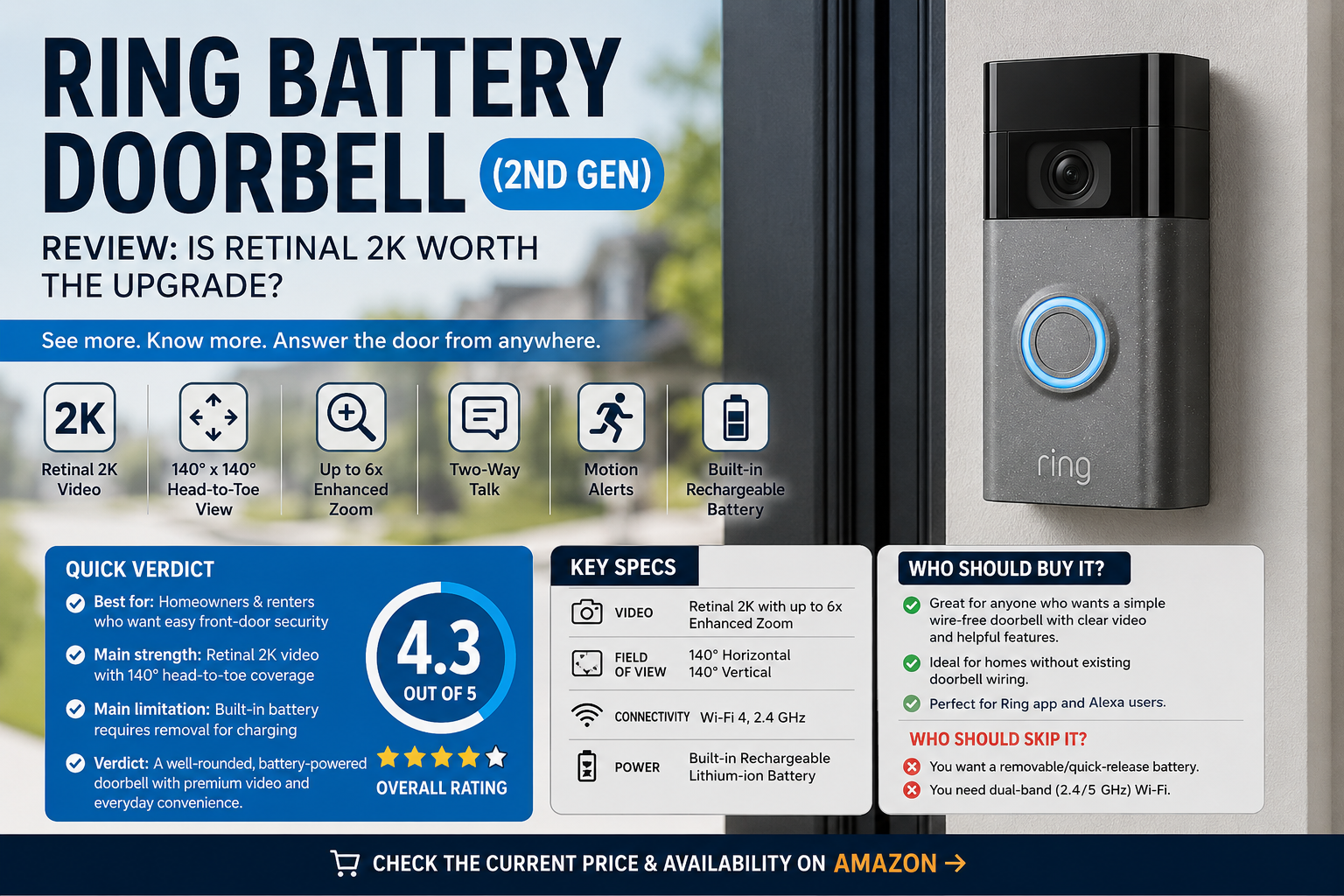


The Ring Battery Doorbell (2nd Gen) combines Retinal 2K video, 140° head-to-toe coverage, motion alerts, Live View, and Two-Way Talk in a convenient battery-powered design. Its built-in rechargeable battery and 2.4 GHz Wi-Fi make it a practical option for straightforward front-door monitoring. Check the current price and availability on Amazon
Affiliate Disclosure: This review contains affiliate links. We may earn a commission at no extra cost to you.
A video doorbell can make it easier to see who is at the front door, check deliveries, and respond to visitors without opening the door. The Ring Battery Doorbell (2nd Gen) approaches that job with a built-in rechargeable battery, wide head-to-toe coverage, motion alerts, and Ring’s newer Retinal 2K video system.
In this Ring Battery Doorbell (2nd Gen) review, the main question is whether those features make it a practical choice for everyday home monitoring without stepping up to one of Ring’s more expensive models. Based on its published specifications, the answer is largely yes for buyers who prioritize straightforward installation and broad front-door visibility. However, its built-in battery design, single-band 2.4 GHz Wi-Fi, and subscription-dependent extras are important tradeoffs to understand before buying.
Table of Contents
Quick Verdict
Best for: Homeowners and renters who want a straightforward battery-powered video doorbell with wide front-door coverage.
Not ideal for: Buyers who want a removable quick-release battery, dual-band Wi-Fi, or the more advanced hardware found in Ring’s higher-tier models.
Main strength: Retinal 2K video combined with a 140° horizontal and 140° vertical head-to-toe field of view.
Main limitation: The rechargeable battery is built into the doorbell, so the device must be detached from its mount for charging.
Research-based verdict: The Ring Battery Doorbell (2nd Gen) offers a strong set of core front-door monitoring features without requiring buyers to move immediately into Ring’s premium doorbell range. Its combination of 2K video, wide vertical coverage, Two-Way Talk, motion alerts, and battery-powered installation makes it particularly appealing for everyday residential use.
Ring Battery Doorbell (2nd Gen) Overview
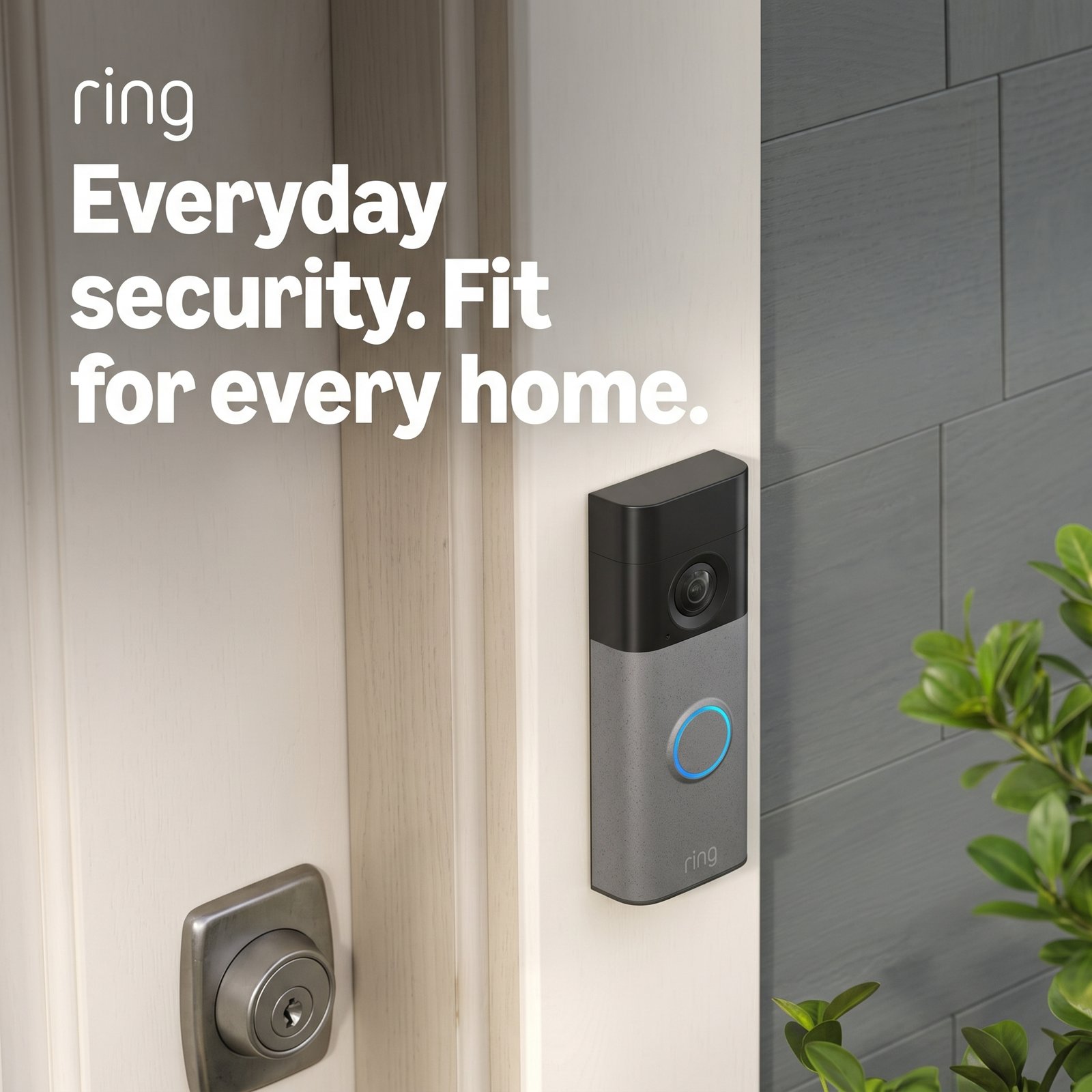
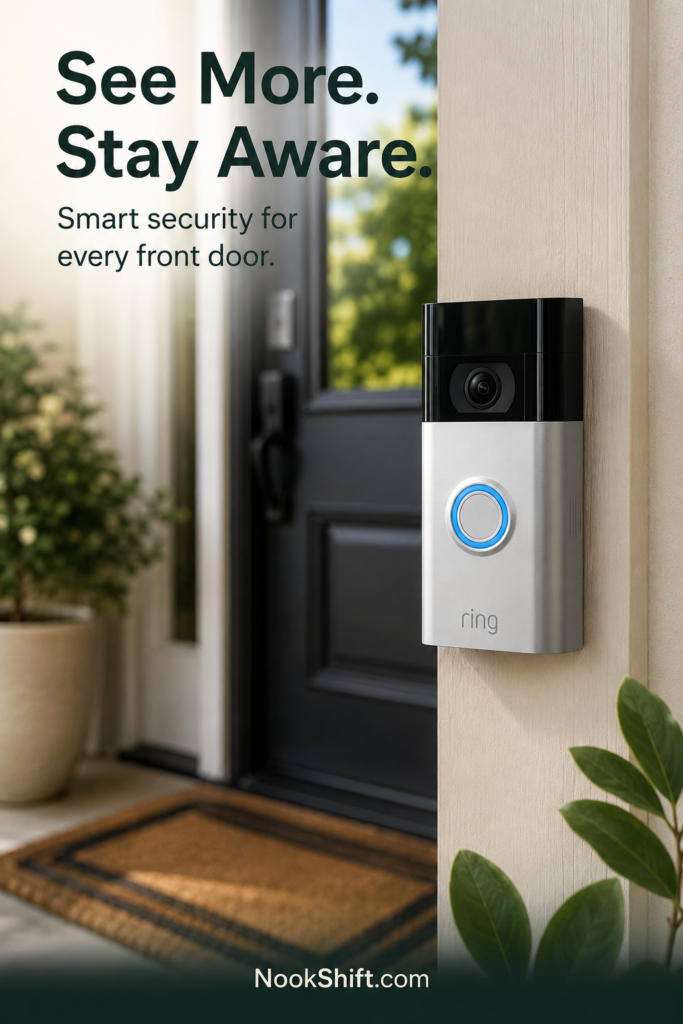
The Ring Battery Doorbell (2nd Gen) is a battery-powered smart video doorbell designed to monitor activity around an entrance and connect that view to the Ring app. The Speckled Gray version reviewed here corresponds to ASIN B0FHJ7TKZM.
Its core functions cover the features most people expect from a modern smart doorbell: video monitoring, motion detection, smartphone alerts, Live View, and Two-Way Talk. Ring has paired those fundamentals with Retinal 2K video and a 140° by 140° field of view intended to capture visitors from head to toe.
Power comes from an internal rechargeable lithium-ion battery. That reduces dependence on existing doorbell wiring and can simplify installation in locations where a wired smart doorbell would be inconvenient.
The result is a product positioned as an accessible entry point into Ring’s current video-doorbell ecosystem rather than its most feature-heavy option.
Key Features
Retinal 2K Video
One of the biggest changes in this generation is Ring’s Retinal 2K video system. The company combines the higher-resolution image with processing designed to maintain useful detail across different lighting conditions.
For everyday use, additional image detail can be valuable when checking who approached the door or examining activity farther from the camera. Video quality will still depend partly on network conditions, and Ring recommends at least a 10 Mbps upload speed for its 2K devices.
That requirement is worth considering if the front door sits in an area with weak Wi-Fi coverage.
140° x 140° Head-to-Toe View
The doorbell provides a 140-degree horizontal and 140-degree vertical field of view.
The unusually broad vertical perspective is particularly relevant at a front entrance. Instead of concentrating primarily on a visitor’s upper body, the camera is designed to provide head-to-toe coverage and make it easier to see activity closer to the doorstep.
That can be useful when checking for deliveries or viewing someone standing relatively close to the door. Placement still matters, however, so careful installation remains important for getting the most useful viewing angle.
Up to 6x Enhanced Zoom
Ring includes up to 6x Enhanced Zoom with this model.
Zoom can help when you want to examine a smaller area of the image rather than relying solely on the full wide-angle view. Combined with Retinal 2K video, it gives users more flexibility when inspecting what is happening around the entrance.
As with any digital video system, zooming should not be confused with adding information that the camera never captured. Network quality and original image conditions still influence how useful fine details appear.
Live View and Two-Way Talk
Live View allows you to open the Ring app and check the camera feed rather than waiting for a doorbell press.
Two-Way Talk adds real-time audio communication. This can be useful for speaking with a visitor, giving simple instructions to someone making a delivery, or checking an unexpected caller while remaining inside.
These features make the doorbell more than a passive camera. For households that regularly receive visitors or deliveries, remote interaction may be one of its most practical everyday benefits.
Motion Detection and Smartphone Alerts
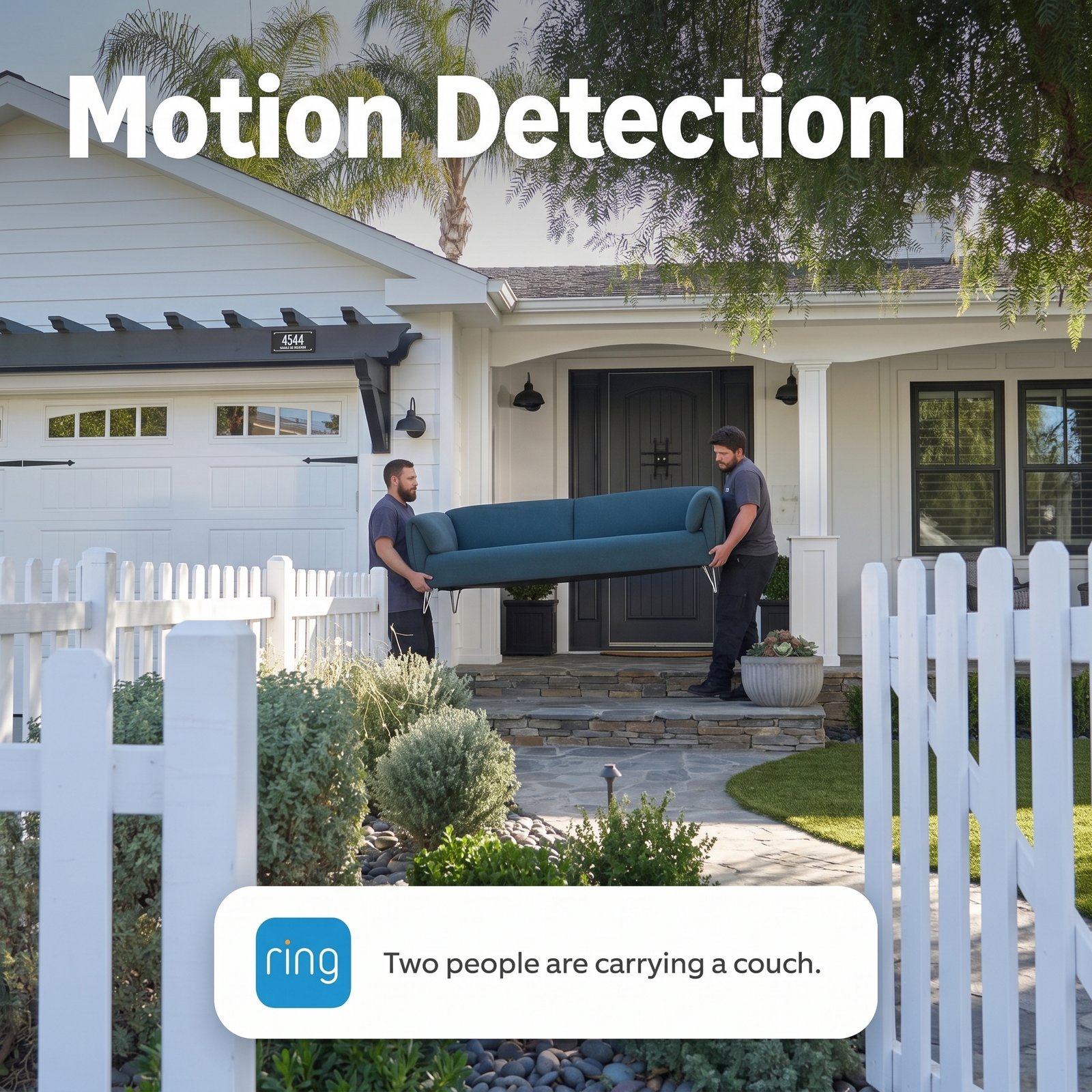
The Ring Battery Doorbell (2nd Gen) can detect motion and send notifications to a connected phone.
This allows the device to notify you about activity even when nobody presses the doorbell button. In practical terms, that can help users become aware of someone approaching or moving within the monitored area.
A video doorbell can also complement other practical tools used to keep a busy home under control. Pet owners dealing with hair around entrances, furniture, or other high-traffic areas may also find our ChomChom Roller review useful.
Built-In Rechargeable Battery
The doorbell uses an integrated rechargeable lithium-ion battery.
This design avoids the need to routinely replace disposable batteries and makes battery-powered installation possible. When charging is required, Ring instructs users to detach the doorbell from its wall mounting and recharge it through USB-C.
That is an important distinction from models built around Ring’s Quick Release Battery Pack. Because the battery is integrated, you cannot simply swap a depleted battery pack for a charged spare while leaving the doorbell installed.
A USB-C charging cable is also not included according to Ring’s published product information.
2.4 GHz Wi-Fi Connectivity
The Battery Doorbell (2nd Gen) uses Wi-Fi 4 on the 2.4 GHz band.
For many homes, 2.4 GHz can be a sensible choice for an outdoor-facing device because it often provides useful range through walls. The tradeoff is that this model does not offer the dual-band 2.4/5 GHz Wi-Fi connectivity available on some more advanced devices.
Buyers with a carefully optimized 5 GHz smart-home network should take that limitation into account.
Performance and Everyday Use
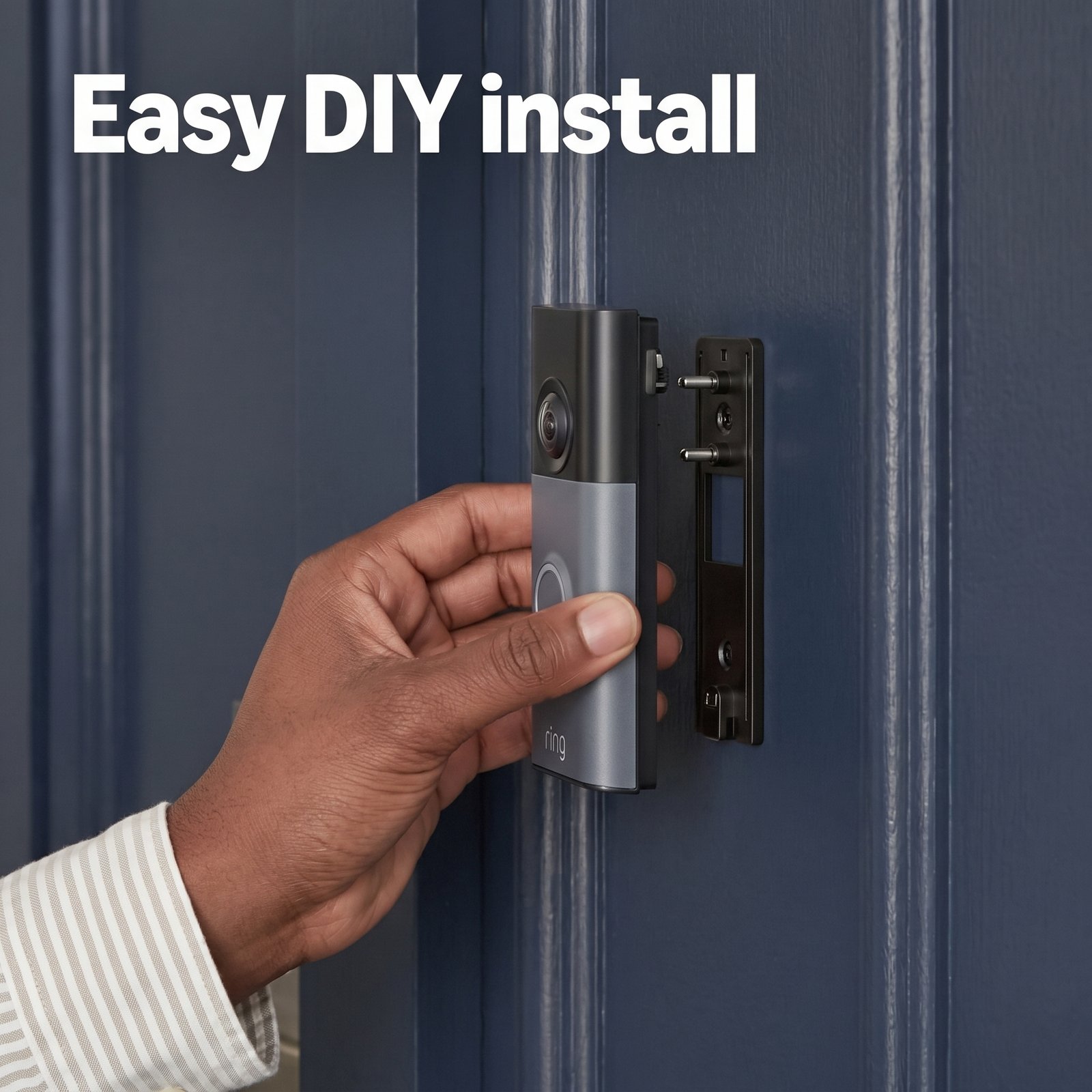
Installation
Ring lists an estimated installation time of around 10 minutes. The package includes a universal mounting plate along with installation tools and hardware.
Because the unit has a rechargeable battery, it can be installed without depending entirely on existing doorbell wiring. That makes it potentially useful for entrances where running new power would add unnecessary complexity.
Existing compatible doorbell wiring can also be relevant to an installation. Ring specifies an 8–24 VAC, 40VA maximum, 50/60 Hz standard doorbell system when wiring the device.
Actual installation time will naturally depend on the mounting surface, existing wiring, Wi-Fi setup, and the user’s experience.
Day-to-Day Viewing
The combination of Retinal 2K video and a 140° by 140° field of view is the strongest part of the feature set on paper.
Wide vertical coverage is particularly useful for a doorbell because important activity does not always happen at eye level. Visitors, children, pets, and packages may occupy very different parts of the frame.
The 6x Enhanced Zoom adds flexibility when closer inspection is needed, while Live View provides a way to check the entrance on demand.
Battery Maintenance
Battery power makes initial placement flexible, but it introduces recurring charging.
Since the battery is built into the device, the doorbell has to be removed from the wall for recharging. Buyers who want to keep a doorbell continuously installed while swapping battery packs should consider a Ring model designed for a Quick Release Battery Pack instead.
Actual time between charges can vary with settings, motion activity, Live View usage, network conditions, and other environmental factors, so a fixed real-world battery-life claim would not be appropriate.
Connectivity
The single-band 2.4 GHz connection should be adequate for many household networks, provided the signal at the entrance is strong enough.
Ring recommends a minimum upload speed of 10 Mbps for its 2K devices and notes that video resolution can vary with available bandwidth. That makes Wi-Fi quality an important part of the buying decision.
If your existing security cameras or smart devices already struggle to maintain a reliable connection near the front door, improving network coverage may be necessary regardless of the doorbell’s camera specifications.
Weather and Outdoor Placement
Ring specifies an operating range of -5°F to 120°F (-20.5°C to 48.5°C) and describes the doorbell as weather resistant.
Those specifications support normal outdoor entrance installation within the stated conditions. As with any outdoor electronic device, following Ring’s mounting and operating guidance remains important.
Ring App and Subscription Considerations
Core functions such as viewing the doorbell through Live View and communicating through Two-Way Talk are central to how the product works with the Ring app.
However, shoppers should distinguish the doorbell hardware from Ring’s optional subscription services. Features involving stored video history and certain enhanced or intelligent functions may require a compatible Ring subscription.
That creates an ongoing-cost consideration for buyers who want more than real-time monitoring. Before purchasing, it is worth deciding whether Live View and alerts meet your needs or whether you expect to rely heavily on recorded event history.
Ring Battery Doorbell (2nd Gen) Specifications
| Specification | Details |
|---|---|
| Video | Retinal 2K with up to 6x Enhanced Zoom |
| Field of view | 140° horizontal, 140° vertical |
| Audio | Two-Way Talk |
| Power | Built-in rechargeable lithium-ion battery |
| Connectivity | Wi-Fi 4, 2.4 GHz single-band |
| Dimensions | 2.11 x 5.78 x 1.41 inches |
| Operating conditions | -5°F to 120°F (-20.5°C to 48.5°C) |
| Reviewed color | Speckled Gray |
Pros and Cons
Pros
- Retinal 2K video provides a higher-detail foundation for front-door monitoring
- 140° horizontal and vertical view offers useful head-to-toe coverage
- Up to 6x Enhanced Zoom for closer inspection
- Battery-powered design reduces dependence on existing doorbell wiring
- Live View and Two-Way Talk support real-time monitoring and communication
- Motion detection can provide smartphone alerts before someone presses the doorbell
Cons
- Built-in battery requires removing the doorbell for charging
- Limited to single-band 2.4 GHz Wi-Fi
- USB-C charging cable is not included
- Some recording and advanced features require a Ring subscription
Who Should Buy the Ring Battery Doorbell (2nd Gen)?
This model makes the most sense for shoppers who want a recognizable smart-home ecosystem and a relatively straightforward way to add video monitoring to an entrance.
It is particularly well suited to homes where running new wiring would be inconvenient. The battery-powered design provides more flexibility, while the head-to-toe field of view is useful for entrances where both visitors and packages need to remain visible.
It may also appeal to existing Alexa or Ring users who want another device integrated into the same general smart-home environment.
For first-time video-doorbell buyers, the feature set covers the important basics without immediately requiring the jump to Ring’s more expensive camera hardware.
Who Should Skip It?
Consider another model if an integrated battery is a major inconvenience. A doorbell that accepts a removable battery pack can be easier to keep operating when one battery needs charging.
This model is also less attractive if dual-band Wi-Fi is a priority. It connects over 2.4 GHz Wi-Fi rather than offering both 2.4 and 5 GHz connectivity.
Finally, shoppers who strongly dislike subscription-based ecosystems should examine exactly which Ring functions they intend to use. The hardware provides useful real-time functionality, but getting more from recorded video and certain enhanced features can introduce an ongoing subscription cost.
Alternatives to Consider
Ring Battery Doorbell Plus (2nd Gen)
The Battery Doorbell Plus (2nd Gen) is worth considering for buyers who want to move above the base Battery Doorbell within Ring’s current lineup.
One particularly important difference is its support for Ring’s Quick Release Battery Pack. That approach can be more convenient for households that prefer swapping batteries instead of removing the complete doorbell for charging.
It occupies a higher position in Ring’s battery-powered range, so buyers should compare the extra capabilities against the additional cost before deciding.
Ring Battery Doorbell Pro
Buyers looking for a more premium Ring doorbell can consider the Battery Doorbell Pro. It is positioned above the standard Battery Doorbell and targets users willing to pay more for Ring’s higher-end feature set.
For many households, however, the standard Battery Doorbell (2nd Gen) may cover the essential job without requiring the premium model.
Frequently Asked Questions
Does the Ring Battery Doorbell (2nd Gen) require wiring?
No. It has a built-in rechargeable battery, allowing battery-powered installation. Ring also provides specifications for compatible existing doorbell wiring when wiring the device.
What resolution does the Ring Battery Doorbell (2nd Gen) use?
Ring specifies Retinal 2K video with up to 6x Enhanced Zoom for this generation.
Can you see packages with this Ring doorbell?
Its 140° horizontal and 140° vertical head-to-toe field of view is designed to provide coverage extending toward the doorstep, which can make packages easier to see when they are positioned within the camera’s view.
Does it work with 5 GHz Wi-Fi?
No. Ring specifies Wi-Fi 4 with a single-band 2.4 GHz connection for the Battery Doorbell (2nd Gen).
Can the battery be removed and replaced?
The battery is built into the doorbell rather than supplied as a Quick Release Battery Pack. The device is detached from its mount when the internal battery needs to be recharged.
Do you need a Ring subscription?
A subscription is not necessary for every basic real-time function, but video history and certain enhanced Ring features require a compatible subscription. Buyers who want recorded event history should factor that potential recurring cost into their decision.
Final Verdict
The Ring Battery Doorbell (2nd Gen) brings together the features that matter most for straightforward front-door monitoring: Retinal 2K video, a broad 140° by 140° head-to-toe view, motion detection, Live View, Two-Way Talk, and flexible battery-powered installation.
Its biggest compromise is the integrated battery. Recharging means taking the doorbell off its mounting rather than swapping a removable battery pack, and buyers looking for dual-band Wi-Fi will also need to consider a different model. Ring’s subscription structure is another factor for anyone who expects to rely heavily on recorded video.
For households that mainly want clear front-door visibility, real-time communication, motion alerts, and installation without depending on hardwired power, this Ring Battery Doorbell (2nd Gen) review finds a well-rounded feature set with sensible everyday appeal.